Why New Flooring Fails Too Soon—and How to Choose a Floor That Actually Fits Your Life

New flooring can completely change a room, but appearance alone is a poor way to choose it. A beautiful hardwood floor may struggle in a moisture-prone entryway. Highly polished tile can become frustrating in a busy household. An inexpensive laminate may perform perfectly in a quiet bedroom but disappoint in a heavily used kitchen.
The real question isn’t simply, “Which flooring looks best?” It’s “Which flooring can handle what happens in this room every day?”
This guide examines the problems that commonly cause homeowners to regret their flooring decisions—and the practical solutions that help a new floor remain attractive, comfortable, and functional for years.
The Problem: Homeowners Choose Flooring for the Room, Not the Lifestyle
A flooring material may be perfectly suitable for a living room but poorly suited to the same family’s kitchen, mudroom, or bathroom. Choosing one material throughout the home without considering how each area is used can create premature wear and unnecessary maintenance.
Start by thinking about what actually touches the floor.
Do children regularly run through the room? Does a large dog cross it with wet paws? Is the entrance exposed to sand and grit? Could water escape from a bathtub? Does direct sunlight reach the floor for several hours every afternoon?
Those questions reveal more about the flooring you need than a design photograph does.
A useful way to evaluate each room is to consider five pressures: traffic, moisture, scratching, sunlight, and maintenance.
| Room | Main Flooring Challenge | Priority |
|---|---|---|
| Entryway | Water, dirt, grit, heavy traffic | Durability and easy cleaning |
| Kitchen | Spills, dropped objects, long periods of standing | Water resistance and comfort |
| Bathroom | Frequent moisture | Water performance and appropriate traction |
| Living room | Furniture, traffic, appearance | Comfort and durability |
| Bedroom | Lower traffic | Comfort and appearance |
The strongest flooring plan may therefore use different materials in different areas rather than forcing one product to perform every job.
Why It Happens: Samples Make It Easy to Ignore Real-World Conditions
Flooring is usually selected under ideal circumstances. Samples are clean, lighting is controlled, and nobody is dragging a dining chair across them or walking over them in wet shoes.
Real homes are less forgiving.
Hardwood offers natural character and can be renewed depending on the product, but it requires appropriate moisture management. Tile performs extremely well around water but is hard underfoot and can make dropped objects more likely to break. Laminate can provide attractive design at an accessible price, although performance varies significantly between products. Luxury vinyl products are popular for practical resilience, but homeowners still need to evaluate product construction, installation requirements, and the quality of the subfloor beneath them.
There is no universally superior material because every flooring choice involves a tradeoff.
A family chooses a glossy floor because it looks dramatic in the showroom. Once installed near the main entrance, footprints, dust, and everyday marks become highly visible.
AFTER
The family evaluates sheen, texture, cleaning requirements, and traffic before choosing the finish. The selected surface still looks refined but requires less constant attention.
This is why samples should be taken home whenever possible. View them in morning and evening light. Place them beside cabinetry and furniture. Put a little ordinary dust on them. Look at them from standing height rather than six inches away.
You aren’t buying the sample at its best. You’re buying the floor for an ordinary Wednesday.
Common Mistakes: The Decisions That Create Flooring Regret
Some flooring problems aren’t caused by the material itself. They’re caused by decisions made before installation.
Mistake 1: Assuming “Water-Resistant” and “Waterproof” Mean the Same Thing
Marketing terminology can create false confidence. Always determine exactly what a manufacturer’s moisture claim covers, including exposure duration, seams, perimeter conditions, installation method, and warranty exclusions.
Even a highly water-resistant finished surface does not make the entire building assembly immune to water damage.
Mistake 2: Ignoring the Subfloor
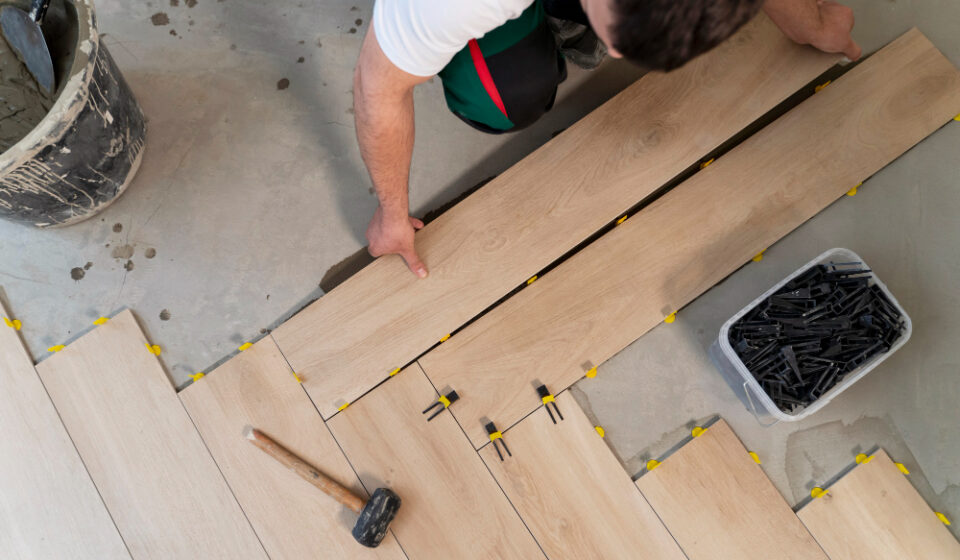
A new floor can only perform as well as the surface supporting it. Unevenness, excessive movement, moisture, contamination, or structural problems can affect appearance and longevity.
The old flooring is removed and the new material is installed immediately, even though the substrate has low spots, movement, or moisture concerns.
Preparation may not be visible when the project is finished, but it can determine whether the floor remains stable.
Mistake 3: Comparing Products Only by Price Per Square Foot
The material price is only one component of the project. Removal, subfloor preparation, underlayment, transitions, baseboards, installation, stairs, furniture movement, and waste can materially affect the final investment.
A lower-priced material that requires substantial preparation isn’t necessarily the least expensive completed floor.
Mistake 4: Forgetting Maintenance
Ask yourself a practical question: How much effort are you realistically willing to put into this floor?
If the answer is “very little,” choose accordingly. A floor you resent maintaining isn’t a successful choice, regardless of how beautiful it looked when installed.
Mistake 5: Choosing Color Without Considering Everyday Debris
Very dark and very uniform surfaces can reveal dust, hair, crumbs, and footprints more readily than some mid-tone or visually varied finishes. Homes with pets, children, or heavy traffic should consider how the floor looks between cleanings—not just immediately afterward.
The Solution: Match the Material to the Hardest Job It Must Perform
Stop asking which flooring material is “best.” Define the conditions in each room first, then eliminate products that cannot comfortably handle those conditions.
For every room, write down its three toughest demands.
A busy kitchen might require resistance to spills, easy cleaning, and comfort during long periods of standing. A bathroom might prioritize moisture performance, appropriate traction, and simple maintenance. A bedroom may place comfort and appearance above extreme durability.
Once the demands are clear, comparison becomes easier.
| Flooring Type | Major Strength | Important Tradeoff | Often Considered For |
|---|---|---|---|
| Hardwood | Natural appearance and long-term design appeal | Requires thoughtful moisture and scratch management | Living rooms, dining rooms, bedrooms |
| Engineered Wood | Wood appearance with layered construction | Refinishing potential varies by product | Living areas and suitable kitchens |
| Porcelain Tile | Strong moisture and wear performance | Hard and potentially cold underfoot | Bathrooms, entries, kitchens |
| Laminate | Accessible cost and broad visual selection | Moisture and repair performance varies by product | Bedrooms, living spaces, suitable kitchens |
| Luxury Vinyl | Practical moisture resistance and easy maintenance | Quality and construction vary considerably | Kitchens, entries, family spaces |
A homeowner selects one flooring material for the entire house because continuous flooring appears larger and more cohesive.
AFTER
The homeowner evaluates the demands of each zone first. Continuous flooring is used where appropriate, while moisture-sensitive or unusually demanding areas receive materials better suited to their conditions.
Continuity is valuable, but performance should not be sacrificed simply to avoid a transition between materials.
Best Practices: Test the Floor Before You Commit
The final selection should survive more than a showroom comparison. Treat samples like materials you’re evaluating for a job.
Take larger samples home when available and examine them beside permanent finishes. Look at them near windows, under artificial lighting, and during different times of day. If you have a pet, compare the sample with visible pet hair. If you’re concerned about cleaning, test the manufacturer’s approved cleaning method on the sample.
Evaluate the entire flooring system—not just the decorative surface. Include substrate condition, installation method, transitions, expansion requirements, underlayment where applicable, maintenance, and warranty conditions in the decision.
Before ordering, confirm these points:
- ✓ Is the material approved by the manufacturer for the intended room?
- ✓ What moisture conditions can it tolerate?
- ✓ What substrate preparation is required?
- ✓ How should spills and stains be cleaned?
- ✓ Can individual damaged sections be repaired or replaced?
- ✓ How visible will scratches, dust, and pet hair be?
- ✓ Are stairs, transitions, trim, and installation included in the budget?
- ✓ What could invalidate the product or installation warranty?
Finally, order with the complete project in mind. Installation waste, pattern matching, room geometry, and future repairs can influence how much material is needed. The appropriate allowance varies by product and layout, so calculate it with the installer rather than relying on a universal percentage.
The homeowner orders flooring before confirming actual room measurements, installation direction, pattern requirements, and expected waste.
Finalize measurements and installation planning first. Then order the quantity required for the specific material and layout, including an appropriate project-specific allowance.
The best flooring choice is rarely the product that wins every category. It’s the one whose strengths match your priorities and whose disadvantages you’re comfortable living with.
If you have children, pets, frequent guests, wet shoes, or little interest in specialized maintenance, include those realities in the decision. Your floor doesn’t live in a showroom. It lives under your actual life.
Choose accordingly, prepare the surface properly, and prioritize installation quality. Do those three things well, and you’re far more likely to have a floor you still enjoy long after the new-floor excitement disappears.