Hardwood, Tile, or Laminate? A Homeowner’s Flooring Questions Answered

Choosing flooring becomes confusing quickly. Hardwood offers natural warmth, tile promises impressive durability, and laminate can deliver convincing wood-inspired designs at a more accessible price. Then questions about moisture, pets, scratches, maintenance, installation, and long-term value enter the conversation.
The problem is that there is no single flooring material that performs best in every room. A floor that makes perfect sense in a quiet bedroom may be a poor choice beside an exterior door where wet shoes and grit arrive every day.
This FAQ answers the practical questions homeowners should ask before choosing between hardwood, tile, and laminate. Rather than declaring one universal winner, it focuses on matching the material to the room, household, and level of maintenance you’re comfortable accepting.
Hardwood: best considered when natural character, warmth, and long-term appearance are priorities.
Tile: particularly useful where moisture resistance and hard-wearing performance matter.
Laminate: practical when affordability, easy care, and broad design selection are important.
Which Flooring Is Best Overall?
There isn’t an honest universal answer. “Best” depends on what the floor will experience.
Hardwood may be the strongest choice for a homeowner who values natural materials and wants flooring that can develop character over time. Tile may be more appropriate for a bathroom exposed to frequent water. Laminate may make better sense for someone who wants a wood-inspired appearance without the price or maintenance expectations associated with natural hardwood.
Instead of asking which flooring wins overall, ask which one best handles the hardest condition in the specific room.
Where Does Hardwood Flooring Make the Most Sense?
Hardwood is especially appealing in living rooms, dining rooms, bedrooms, hallways, and other relatively dry interior spaces. Its natural variation gives rooms a warmth that manufactured materials attempt to reproduce but cannot duplicate exactly.
Depending on the product and construction, hardwood may also offer the possibility of refinishing rather than complete replacement after years of wear. That potential is one reason homeowners often view quality wood flooring as a long-term material rather than simply a decorative surface.
However, wood responds to its environment. Moisture, humidity changes, scratches, and prolonged water exposure deserve consideration before installation.
Consider hardwood when you prioritize natural appearance, warmth, and long-term character and are comfortable providing appropriate care.
Is Hardwood a Good Choice for Kitchens?
It can be, but the answer depends on the household.
Kitchens expose flooring to spills, dropped cookware, food debris, chair movement, and heavy traffic. Hardwood can work successfully when spills are cleaned promptly and the household accepts that dents or scratches may develop with use.
If you expect the floor to remain visually perfect despite demanding kitchen activity, another material may be less stressful to live with. If you appreciate natural patina and want continuity between the kitchen and surrounding living spaces, hardwood may remain very attractive.
The decision is less about whether hardwood is “allowed” in a kitchen and more about whether its maintenance profile matches your expectations.
Is Tile Always the Best Flooring for Bathrooms?
Tile—particularly products intended for floor applications—is one of the most established choices for bathrooms because the material itself can perform very well around water. It also offers enormous design flexibility, from stone-inspired surfaces to understated large-format designs.
But selecting bathroom tile requires more thought than simply choosing a color.
Consider:
- Appropriate traction when the floor is wet.
- Grout maintenance.
- Surface texture.
- Comfort under bare feet.
- The quality of the waterproofing system beneath wet areas.
A durable tile doesn’t compensate for poor installation or inadequate waterproofing. The visible tile is only one component of the finished floor system.
What Are the Biggest Disadvantages of Tile?
Its strength can also be its weakness. Tile is hard.
That hardness contributes to durability, but it can make long periods of standing less comfortable. Dropped glasses and dishes are also less likely to survive impact with a hard tile surface.
Tile may feel cool underfoot depending on climate and construction. Some homeowners address this with radiant floor heating, but that needs to be planned as part of the flooring assembly rather than treated as an afterthought.
Grout is another consideration. The amount of grout, its color, installation quality, and maintenance can affect how easy the floor is to keep looking clean.
When Does Laminate Make More Sense Than Hardwood?
Laminate becomes particularly compelling when you like the appearance of wood but have different priorities for cost and everyday maintenance.
Modern laminate is available in a wide range of realistic wood-inspired visuals, textures, plank sizes, and colors. It can be useful in bedrooms, living areas, offices, and other locations approved by the specific product manufacturer.
It can also make financial sense when you’re flooring a large area and want visual continuity without allocating a hardwood-level budget to every square foot.
Laminate can be a strong choice when you want wood-inspired design, practical maintenance, and budget flexibility. Product quality and moisture specifications vary, so compare technical requirements rather than appearance alone.
Can Laminate Be Installed in Kitchens?
Many contemporary laminate products are designed with improved resistance to everyday spills, and some are specifically marketed for demanding residential environments. However, specifications differ significantly.
Never assume that every laminate product has the same moisture performance. Check the manufacturer’s documentation for the exact product you’re considering, including installation requirements and limitations involving standing water.
If the kitchen frequently experiences spills, pet-water-bowl splashes, or other moisture, those conditions should be discussed before the flooring is selected.
What About Laminate in Bathrooms?
This is where product-specific instructions become particularly important.
Bathrooms create a more demanding moisture environment than most other rooms. Water can reach edges, transitions, toilet areas, and the perimeter of the room—not simply the center of the plank.
Some flooring products may be approved for particular bathroom applications when installed according to detailed requirements, while others may not be appropriate. Verify the manufacturer’s instructions and warranty rather than relying on broad terms such as “water-resistant.”
If frequent standing water is expected, tile or another flooring system specifically intended for wet environments may provide a more straightforward solution.
Which Flooring Is Best for Dogs?
Pets change the flooring equation because scratches aren’t the only issue. Think about nails, water bowls, accidents, hair, tracked-in dirt, and how easily the surface can be cleaned.
Tile generally offers excellent resistance to scratches from normal pet traffic, although its hardness can be less comfortable for some animals. Hardwood provides warmth but can show scratches depending on the species, finish, sheen, and pet. Laminate can provide good everyday wear performance, but individual products vary.
If you have a large or active dog, bring the pet into your flooring decision instead of hoping the material will cope afterward.
Also consider appearance. A surface close to the color of your pet’s hair may look cleaner between vacuuming sessions than a dramatically contrasting floor.
Which Flooring Is Easiest to Maintain?
For routine cleaning, both tile and many laminate products can be relatively straightforward. Hardwood is also manageable, but homeowners need to use cleaning methods appropriate for the finish and avoid excessive moisture.
Maintenance, however, includes more than weekly cleaning.
Ask what happens when the floor is damaged. Can one plank or tile be replaced? Will the replacement match? Can the surface be renewed? What does the manufacturer recommend for long-term care?
A floor that takes five minutes less to clean but is extremely difficult to repair isn’t automatically the lowest-maintenance choice.
Which Flooring Hides Dirt and Scratches Best?
Color, pattern, texture, and sheen can matter almost as much as material.
Very dark floors can make pale dust and pet hair highly visible. Extremely light, uniform surfaces may emphasize dark debris. High-gloss finishes can reveal footprints, reflections, and scratches more readily than some lower-sheen alternatives.
Mid-tone flooring with natural visual variation is often more forgiving between cleanings.
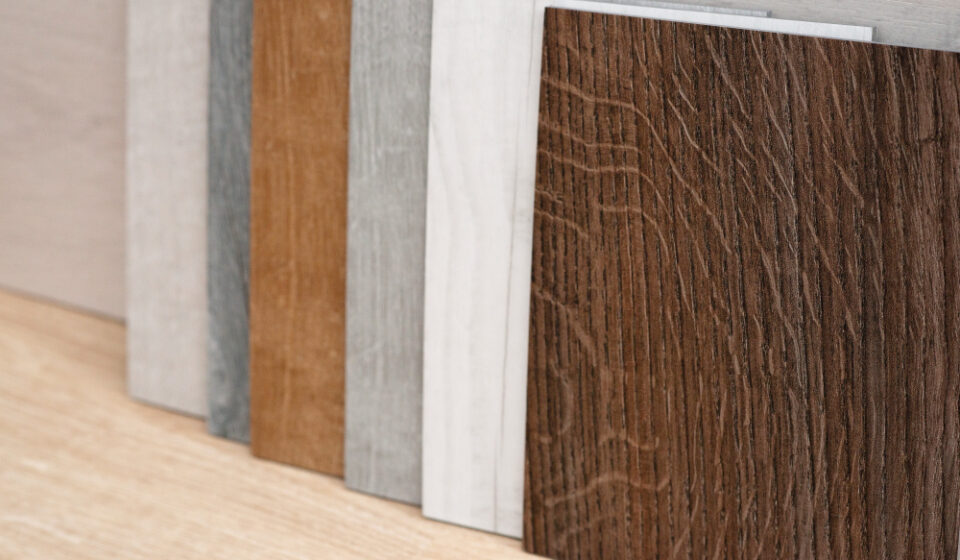
Before ordering, place a sample on your actual floor for several days. Look at it in morning light, evening light, and artificial illumination. Then see how ordinary household dust looks against it.
Should the Same Flooring Run Through the Entire House?
Continuous flooring can make adjoining rooms feel connected and visually calmer. In open-plan homes, limiting unnecessary transitions can also make the interior feel larger.
But continuity shouldn’t override performance.
If one part of the house regularly encounters water, heavy dirt, or unusually demanding traffic, introducing another flooring material may be the more practical decision. A well-designed transition is preferable to using an unsuitable material simply because you don’t want the floor to change.
How Important Is the Subfloor?
Extremely important—and often underestimated.
The finished flooring is only the visible layer of a larger system. Depending on the flooring and installation method, excessive unevenness, moisture, movement, or contamination in the substrate can contribute to installation problems.
Before new flooring goes down, the installer should evaluate the substrate according to the flooring manufacturer’s requirements.
Don’t spend your entire flooring budget on the surface you can see. Preparation and installation quality can be just as important as the flooring itself.
How Should I Compare Flooring Prices?
Don’t compare only the price printed beside the sample.
The completed project may include old-floor removal, disposal, subfloor preparation, underlayment, installation, trim, transitions, stairs, furniture movement, and additional material for cutting or pattern requirements.
Request quotes that clearly identify what’s included. A lower material price doesn’t necessarily produce the lower completed-project cost.
How Much Extra Flooring Should I Order?
There isn’t one correct percentage for every project. Room geometry, installation pattern, plank or tile dimensions, defects, cuts, and manufacturer recommendations all affect the amount of additional material required.
A simple rectangular bedroom may produce relatively little waste, while diagonal tile, complex patterns, numerous corners, or intricate layouts can require considerably more.
Have the installer calculate the quantity after the final layout is established. If practical, retaining some matching material after installation can also make future repairs easier, particularly if the exact color or product is later discontinued.
What Should I Ask Before Making the Final Decision?
Before ordering hardwood, tile, or laminate, make sure you can answer these questions:
- Is the product approved for this specific room?
- How will it handle the moisture expected here?
- How easily does it scratch or show wear?
- What maintenance does the manufacturer require?
- What preparation does the existing substrate need?
- Can damaged pieces be repaired or replaced?
- What isn’t covered by the warranty?
- What is the total installed cost rather than just the material price?
If you don’t know the answers, you’re probably not ready to order yet.
Conclusion: Which Flooring Should You Choose?
Choose hardwood when natural character, warmth, and long-term visual appeal are central priorities and you’re comfortable with the care natural wood requires. Choose tile when moisture performance, durability, and easy surface cleaning are especially important. Consider laminate when you want broad design flexibility and practical value without investing in natural hardwood.
Most importantly, choose for your real household rather than an imaginary perfectly maintained one. Children spill things. Dogs run through rooms. Shoes bring in grit. Bathrooms get wet. Furniture moves. Life happens.
The right floor isn’t the one that looks flawless in a showroom. It’s the one whose strengths match the demands of your room—and whose compromises you’re willing to accept every day.